
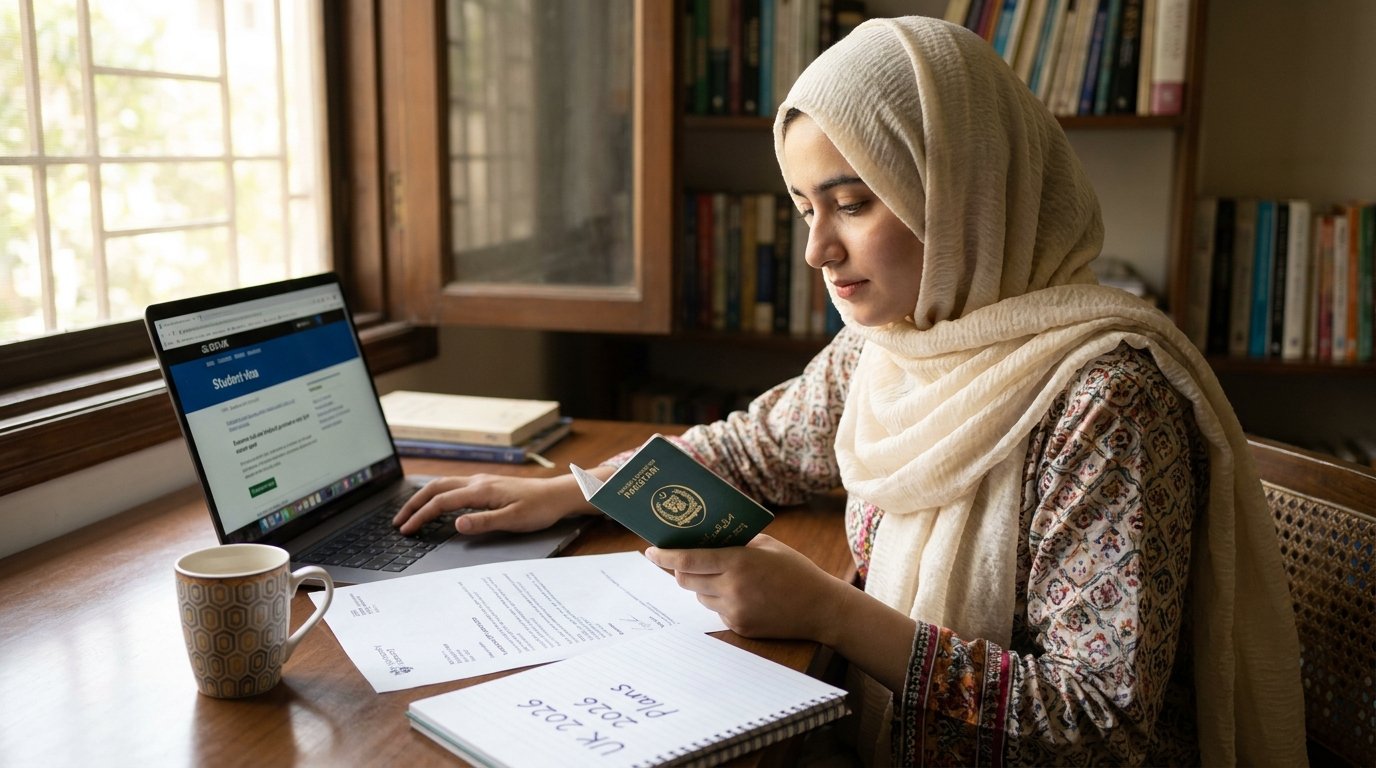
My cousin applied for a UK study visa last September. Strong grades, valid IELTS, university offer in hand. She had done everything “right.” Still got rejected — because her bank statement showed a small dip on day 11 of the required 28 days. Just one dip. Non-refundable £524 down the drain, plus weeks of anxiety.
That’s the UK study visa from Pakistan in a nutshell: the rules aren’t complicated, but the margin for error is razor-thin.
If you’re planning to study in the UK and you’re sitting in Pakistan right now trying to figure out where to start — this guide is written for you. No fluff, no recycled embassy website copy. Just the real process, with the numbers that actually matter in 2026.
Quick Answer
To get a UK study visa from Pakistan in 2026, you need a university offer letter, a CAS number, IELTS score, TB test certificate, and proof of funds (£10,224–£13,347 for 9 months of living costs + full tuition). The visa fee is now £558 (increased April 8, 2026) plus £776/year IHS. Processing typically takes 3–6 weeks through VFS Pakistan.
Who Needs a UK Student Visa from Pakistan?
Any Pakistani citizen studying in the UK for more than 6 months needs a Student Visa (formerly called Tier 4). It’s the main route — whether you’re going for an undergraduate degree, a master’s, or a PhD.
There’s also a Short-Term Student Visa for English language courses lasting 6–11 months (£263–£400), but you can’t work on that one and you can’t extend it from inside the UK. Most people reading this will want the full Student Visa.
One important thing to note: the UK is not Schengen. Your UK visa only covers the UK. If you want to visit Europe from the UK, you’ll need a separate Schengen visa. Many Pakistani students are genuinely surprised by this.
What You Actually Need: The Real Documents List
Let’s skip the vague “proof of funds” language and get specific.
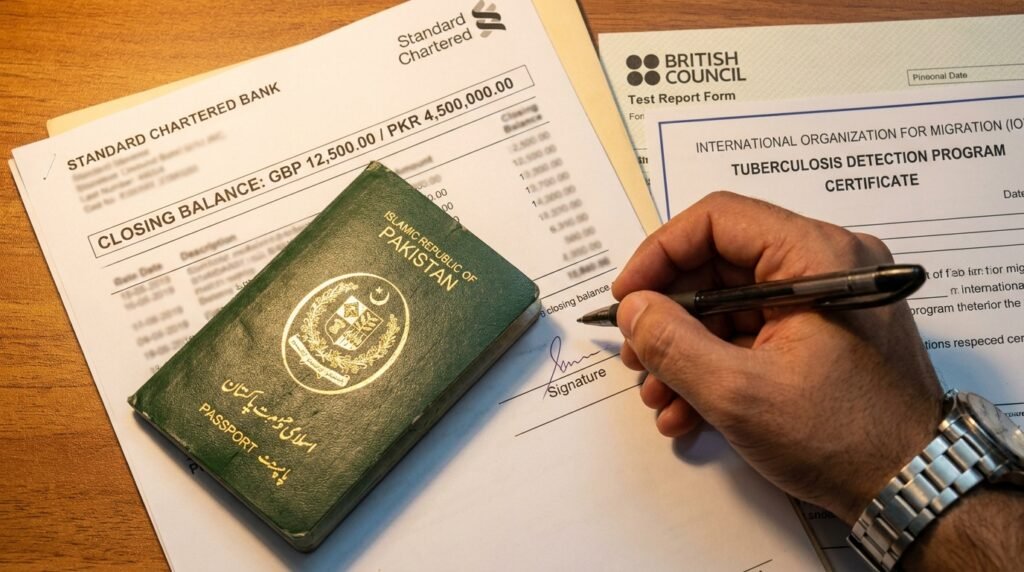
Identity & Academic:
- Valid passport (at least 6 months validity beyond your intended return — more is better)
- Confirmation of Acceptance for Studies (CAS) — your university issues this after you accept your offer and pay any deposit
- Academic transcripts and certificates (matching exactly what’s listed in your CAS)
- IELTS UKVI or equivalent English test scores
Financial Documents:
- Bank statements showing required maintenance funds held for 28 consecutive days before your application date
- Statement must be dated no more than 31 days before you apply
- If a sponsor (parent or guardian) is funding you, their bank statements + a signed sponsorship letter + proof of relationship (B-form / NADRA family certificate)
- If scholarship: official scholarship letter
Medical:
- Tuberculosis (TB) test certificate from a UK-approved medical centre in Pakistan — IOM Pakistan (iom.org.pk) is the most common. Costs roughly PKR 5,000–10,000. Certificate valid for 6 months.
Other:
- Immigration Health Surcharge (IHS) payment confirmation — paid online during the application
- Passport-size photographs (as per VFS specifications)
- Visa application fee payment confirmation
HEC Attestation Note: Unlike European student visas, the UK Student Visa does NOT currently require HEC attestation of your degrees as a standard mandatory step in the visa process itself. However, some universities may ask for attested transcripts during admissions. Always confirm directly with your institution — because wasting 3–4 weeks at HEC for something you didn’t need is a very Pakistani experience.
The Step-by-Step Process (Realistic Version)
Step 1: Get Your University Offer and CAS
You need an unconditional offer from a UK university licensed as a student sponsor. Once you accept and pay your deposit (usually £2,000–£6,000), the university issues your CAS number — a unique 14-character reference. You cannot apply for the visa without it.
Universities typically issue CAS numbers about 3–6 months before the course starts. Don’t rush them, but do follow up.
Step 2: Book and Complete Your TB Test
Do this early. IOM Pakistan clinics can get booked up, especially in Lahore and Islamabad. Walk-in is rarely possible. Book online at iom.org.pk, get the chest X-ray done, and receive your certificate usually within 3–5 working days.
Step 3: Prepare Your Bank Statements (28-Day Countdown)
This is where most Pakistani students mess up. The money — both your living cost requirement AND any outstanding tuition fees — must sit in the account for 28 consecutive days. No fluctuations below the required amount on any single day.
Calculate your exact requirement:
- Outside London: £10,224 (for 9 months living costs)
- In London: £13,347 (for 9 months living costs)
- Plus: Remaining unpaid tuition fees for year one
So if your year-one tuition is £18,000 and you already paid a £5,000 deposit, you need to show £13,000 + living costs = £23,224 minimum (outside London). That’s roughly PKR 78–82 lakh at current rates, depending on which bank you use.
Start the 28-day clock before you apply. The statement you submit must show the 28th-day balance and must be dated within 31 days of your application date.
Step 4: Apply Online
Go to the UK Government’s official visa application portal. Fill out the online form carefully — every detail must match your CAS exactly. Pay the application fee (currently £558 as of April 8, 2026) and the IHS upfront. Both are non-refundable once you submit.
IHS for a 1-year master’s typically comes to £1,552 (because the visa is issued for around 16 months including the 4-month grace period after course end, so you pay for 2 years of IHS = £1,552). For a 3-year bachelor’s, expect around £2,716–£3,104 in IHS alone.
Step 5: Book Your VFS Appointment
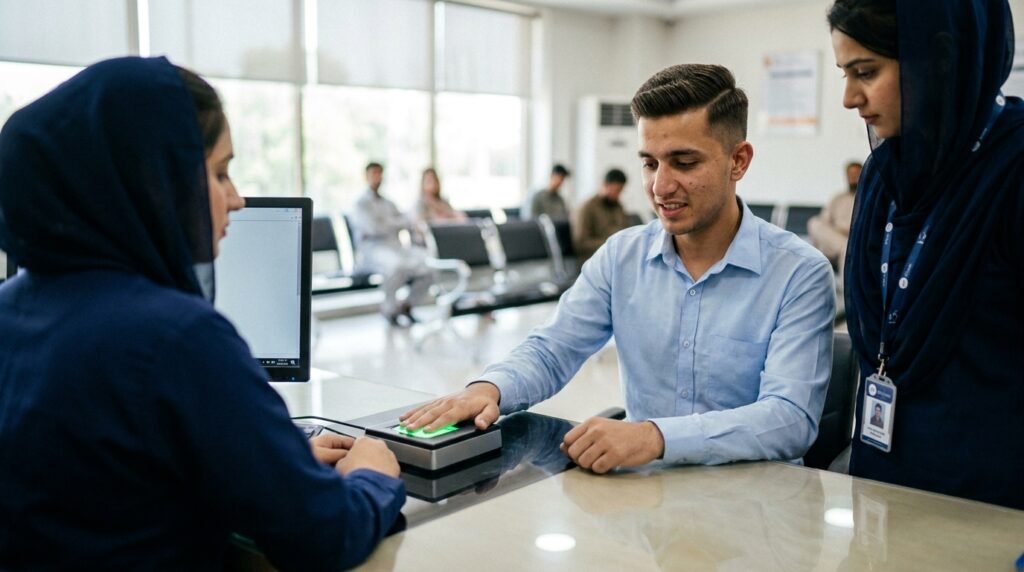
After submitting online, you’ll book a biometrics appointment at a VFS Pakistan visa application centre. Centres are in:
- Islamabad
- Lahore
- Karachi
- Mirpur
VFS appointment availability can vary — Lahore and Karachi centers sometimes have 2–3 week waits during peak season (June–August). Book early. Bring all your original documents plus copies.
Step 6: Wait for a Decision
Standard processing from Pakistan is 3–6 weeks. If you need it faster, priority processing (£500 extra) targets 5 working days, and super priority (£1,000 extra) aims for the next working day — though availability isn’t always guaranteed in Pakistan.
If UKVI needs to verify something, they might call you for a credibility interview. This is more common for certain courses or universities. Stay calm, be honest, and know your course details well.
Complete Cost Breakdown for 2026
This is the number everyone underestimates. Here’s a realistic total for a 1-year Master’s program outside London:
| Cost Item | Amount (GBP) | Approx. PKR |
|---|---|---|
| Visa application fee | £558 | ~PKR 2,00,000 |
| Immigration Health Surcharge (IHS) ~2 years | £1,552 | ~PKR 5,56,000 |
| TB test | ~£30–40 | ~PKR 10,000–15,000 |
| VFS service charge | ~£50–60 | ~PKR 18,000–22,000 |
| Priority processing (optional) | £500 | ~PKR 1,79,000 |
| Visa-related total (standard) | ~£2,200 | ~PKR 7,90,000 |
Then there’s your maintenance fund requirement (not a fee you pay, but money you need to have):
- Outside London: PKR ~36–40 lakh minimum in your account
- Plus remaining tuition: varies widely (£10,000–£35,000/year)
Currency conversion shock is real. When that bank statement requirement translates to PKR numbers, many families genuinely aren’t prepared. Start planning finances 6–9 months before your application date, not 6 weeks before.
UK Student Visa Processing Time from Pakistan
- Standard: 3–6 weeks from the date of application
- Priority: ~5 working days (£500 extra fee)
- Super Priority: Next working day (£1,000 extra fee — availability varies)
The earliest you can apply is 6 months before your course start date. Most advisors recommend applying at least 3 months out. For September 2026 intake, that means applying no later than June — and honestly, May is better.
One thing I wish someone had told me when I went through a similar process in Europe: approval rates for Pakistani applicants are not as high as you’d think. For student visas specifically, genuine applicants with complete documentation have roughly a 70–80% success rate — but that figure drops sharply when funds aren’t perfectly documented or when ties to Pakistan aren’t convincingly established.
Work Rights on a UK Student Visa
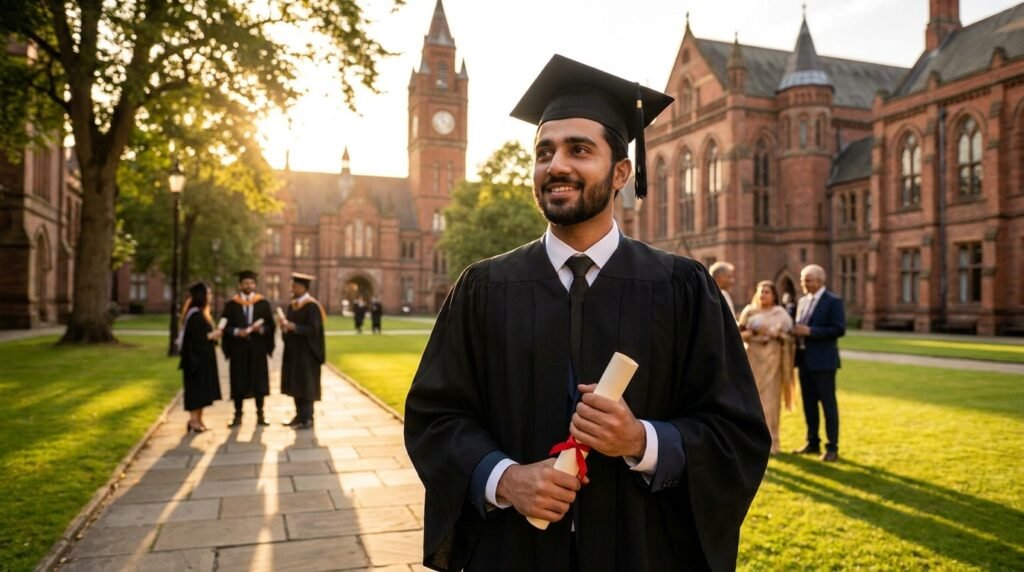
This is actually one of the UK’s stronger selling points. On a full Student Visa at degree level:
- During term time: Up to 20 hours per week
- During official holidays: Full-time (40+ hours)
Below degree level (foundation, diploma), it’s 10 hours per week. And if you’re on the Short-Term Student Visa — zero work rights.
The Graduate Visa — which lets you stay and work in the UK after graduation — is available for up to 2 years for bachelor’s and master’s grads (if you apply before December 31, 2026). From January 1, 2027, this drops to 18 months for new applications. So if you’re considering this route, timing your course completion matters.
Common Mistakes Pakistani Students Make (And How to Avoid Them)
1. The Bank Balance Dip Already mentioned my cousin’s case. The 28-day rule is absolute. One transaction that reduces your balance below the requirement on any single day — even day 27 — and UKVI can reject the evidence. Keep that account completely frozen for those 28 days.
2. Mismatch Between Documents and CAS Your CAS is the anchor of the entire application. Your name, date of birth, course name, fees — everything in your documents must match what the university put in your CAS. A single spelling error can trigger delays or rejection.
3. Applying Too Late Pakistani students often wait until they’ve “finalised everything.” But VFS appointment availability, TB test scheduling, 28-day bank waiting period, and 3–6 week processing time all add up fast. If your course starts September, start the whole process no later than April–May.
4. Using Funds from Multiple Sources Without Explanation UKVI wants to see the money sitting clearly in one account (yours or your sponsor’s). If the amount suddenly appeared from multiple transfers right before the 28-day period, caseworkers will question the source. Funds should look stable and organic.
5. Ignoring the TB Test Until the Last Minute The certificate is only valid for 6 months. But the mistake isn’t expiry — it’s not booking the IOM appointment early enough and running out of time before the VFS appointment.
Pro Tips That Actually Help
Lock in your exchange rate early. The Home Office sets its own quarterly exchange rate for visa fees paid in PKR — it’s different from the market rate. Check the VFS website or the official Home Office fee calculator for the current PKR amount before planning.
Apply for a CAS from a Russell Group or well-ranked university if possible. It doesn’t guarantee approval, but visa officers apply more scrutiny to applications linked to newer or lesser-known institutions.
Write a strong personal statement for your visa application. Yes, there’s an optional “additional information” box. Many students leave it blank. Use it briefly to reinforce your intent to return to Pakistan — mention family, career goals, property or business ties. It signals genuine student intent.
Keep a scanned folder of every document. VFS can ask for additional documents after submission. Having everything organised and accessible (Google Drive works) saves time.
UK vs Europe: A Genuine Comparison for Pakistani Students
Since I’m writing this from Europe — people often ask me: UK or EU?
The UK has better-ranked universities, English as the medium, and a real post-study work path through the Graduate Visa. Germany, for example, is cheaper and has a 18-month job seeker visa — but you need German language skills for most programs and the bureaucracy is heavy.
For pure career outcome and international recognition, UK wins. For cost of living and long-term residency pathways, certain EU countries are now becoming serious alternatives. If you’re considering both, PaceDraft has a helpful breakdown of the Germany student visa process for comparison.
What is the UK student visa fee from Pakistan in 2026?
As of April 8, 2026, the UK student visa application fee is £558 (increased from £524). You also pay the IHS separately — £776 per year of your visa.
How much money do I need in my bank account?
For outside London: £10,224 for 9 months of living costs, plus any remaining tuition fees for year one. For London: £13,347 in living costs. The full amount must be maintained for 28 consecutive days before your application.
What is the UK study visa processing time from Pakistan?
Standard processing is 3–6 weeks. Priority processing (£500 extra) takes around 5 working days.
Do I need a TB test for a UK student visa from Pakistan?
Yes. A TB test certificate from an IOM-approved clinic in Pakistan is mandatory for stays longer than 6 months. It’s valid for 6 months.
Can I work on a UK student visa?
Yes — up to 20 hours per week during term time and full-time during official holidays, if you’re studying at degree level or above.
Is the Graduate Visa still available after a UK master’s degree?
Yes. Currently you can stay for 2 years post-graduation. From January 1, 2027, this reduces to 18 months for new applications.
What happens if my UK study visa is refused?
The visa fee is non-refundable. The IHS fee is refundable if refused. You can reapply, but you must address the specific refusal reason. Getting a credible immigration advisor to review your documents before reapplying is strongly recommended.
Final Thoughts
Getting a UK study visa from Pakistan is very much doable — but it punishes careless preparation. The bank statement rules, the TB test timing, the CAS verification process — each of these has caught out students who thought they were ready.
Start 5–6 months before your intake. Keep your finances clean and documented. Lock your bank balance for the full 28 days. Apply early, not just on time.
And if you need help drafting your visa cover letter or SOP, PaceDraft’s free AI-powered tools can save you hours. The cover letter generator is built specifically for Schengen and UK student applications — and it’s completely free, no login needed.
Good luck. You’ve got this.
Visa rules and fees change frequently. Always verify the latest requirements at gov.uk/student-visa before applying.



Very informative
thanks