
My cousin applied for a Schengen visa last year. Spent almost PKR 30,000 on the whole process. And got rejected.
The reason? His bank statement showed a large amount transferred into his account just 10 days before the application. He thought more money would help his case. The embassy officer saw it differently — flagged it as funds borrowed specifically for the visa, and that was the end of it.
The wild thing is, this mistake is avoidable. Completely. And it’s one of maybe five or six things that kill most Pakistani Schengen applications before they even get reviewed properly.
This guide covers all of them. I’ve broken down the complete 2026 process — verified fees, the actual documents you need, which countries give the easiest approvals, and the insider stuff that doesn’t show up on embassy websites. By the time you finish reading, you should have a clear picture of exactly what to do (and what not to do).
The 60-Second Summary — Schengen Visa for Pakistanis 2026
A Schengen visa allows Pakistani citizens to travel freely across 29 European countries for up to 90 days within any 180-day period. The 2026 visa fee is €90 (~PKR 28,000–30,000) for adults, plus a VFS service charge of approximately €17–25. You need a 6-month bank statement, €30,000 travel insurance, hotel and flight bookings, and proof of employment. Processing typically takes 15–30 working days. Apply at the embassy of the country where you’ll spend the most time.
What Is a Schengen Visa and Who Needs It?
If you hold a Pakistani passport and want to visit Europe, you need a Schengen visa. No way around it.
The Schengen Area in 2026 covers 29 countries: Austria, Belgium, Bulgaria, Croatia, Czech Republic, Denmark, Estonia, Finland, France, Germany, Greece, Hungary, Iceland, Italy, Latvia, Liechtenstein, Lithuania, Luxembourg, Malta, Netherlands, Norway, Poland, Portugal, Romania, Slovakia, Slovenia, Spain, Sweden, and Switzerland.
One visa. All 29 countries. That’s the beauty of it.
The standard short-stay Schengen visa (Type C) lets you stay for a maximum of 90 days in any 180-day period. It covers tourism, business trips, family visits, and educational trips. It does not give you the right to work.
If you’re going for long-term study or work — that’s a different visa altogether, handled by each country separately.
Schengen Visa Fees for Pakistanis in 2026 — The Full Breakdown

Let’s talk numbers first because this is where most people go in unprepared.
The standard Schengen visa fee was officially updated to €90 for adults — up from the old €80. This applies uniformly across all 29 Schengen countries. Germany, Italy, Greece, Lithuania — doesn’t matter. The embassy fee is the same everywhere. Before you start calculating the schengen visa price in pakistan, keep in mind that the PKR equivalent changes daily based on the exchange rate, so the final amount you pay at the counter may differ slightly from what you estimated online.
Here’s the full cost picture:
| What You’re Paying | Amount |
|---|---|
| Embassy visa fee (adults) | €90 (~PKR 28,000–30,000) |
| Embassy visa fee (children 6–12 years) | €45 (~PKR 14,000–15,000) |
| Children under 6 | Free |
| VFS / Gerry’s service charge | €17–25 (~PKR 5,500–8,000) |
| Travel insurance (30-day trip) | ~PKR 8,000–18,000 |
| Flight itinerary (if using paid service) | PKR 500–1,500 |
| Hotel bookings | Varies |
| Realistic total per adult | ~PKR 45,000–60,000 |
A few things to keep in mind:
The PKR amount changes daily. Since fees are charged at the current exchange rate, the PKR equivalent you’ll pay on application day might be slightly different from what you calculated a week ago. Check the VFS website on the morning of your appointment for the exact figure. Always carry a bit extra.
All fees are paid in cash at the counter. Most VFS centers in Pakistan (Islamabad, Lahore, Karachi) do not accept cards for visa and service fees. Bring cash.
Nothing is refundable. This is the harsh reality. If your visa gets rejected, the embassy keeps the €90. If you cancel your trip, same story. The fee pays for processing — not for approval.
Where Do Pakistani Applicants Apply?

This is probably the most misunderstood rule in the whole process — and it causes rejections before you’ve even submitted anything.
You apply at the embassy of the country where you’ll spend the most time.
Spending 8 days in Italy and 4 days in France? Apply to Italy’s embassy or their VFS center.
Spending equal time in multiple countries? Apply at the embassy of your first point of entry into the Schengen area.
You cannot pick your favorite country or the one with the easiest reputation. The application has to match your itinerary. If it doesn’t, expect a rejection on administrative grounds.
VFS Global and Gerry’s handle applications for most Schengen countries in Pakistan across three cities: Islamabad, Lahore, and Karachi. Not every country has centers in all three cities, so verify on the official VFS website before booking your appointment.
Schengen Visa Requirements from Pakistan (2026 Checklist)
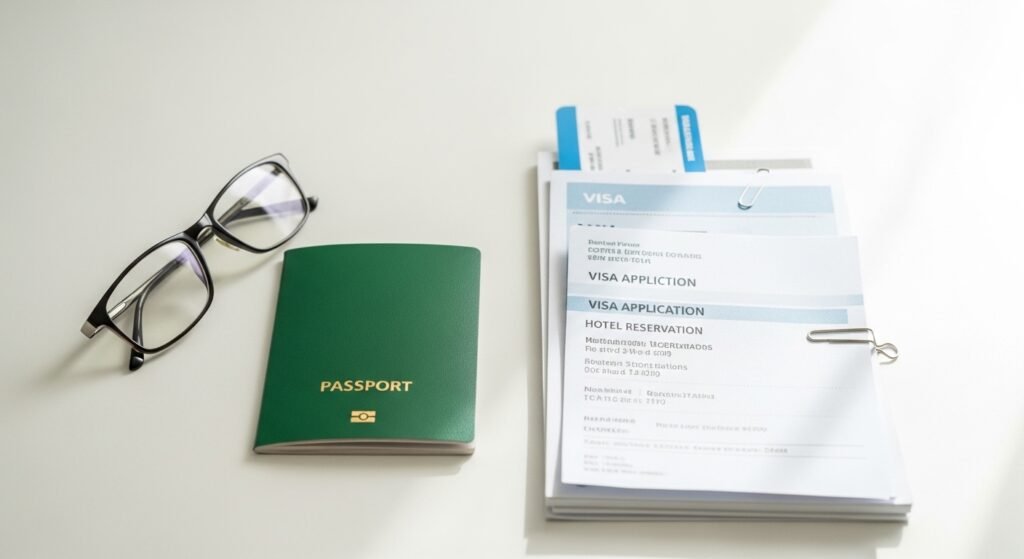
Get this part right and you’ve already won half the battle.
Identity Documents:
- Valid passport — minimum 3 months validity beyond your last day in Schengen, plus 2 blank pages for the visa sticker
- Photocopies of previous passports (if any)
- 3 recent passport-size photographs — white background, taken within the last 6 months, no filters or editing
- NADRA Family Registration Certificate (B-Form or Family Tree)
- Pakistani National ID Card (original + copy)
Financial Proof — This Is Where Most Pakistani Applications Die:
- Bank statement for the last 6 months — this changed in 2026, many embassies now require 6 months instead of the old 3 months
- Bank statement for the previous year as well (some embassies, especially Greece, require this)
- Salary slips for the last 3 months
- Tax documents showing income (for self-employed applicants)
- Cash is not accepted as proof of funds. It has to be on paper — bank statements, credit card statements, or traveler’s cheques
The financial requirement that seems to confuse people most: you need to show roughly €50–€70 per day of travel, covering your expenses. So for a 15-day trip, that’s approximately €750–€1,050 in accessible funds — not counting your pre-paid flights and accommodation.
Travel Documents:
- Round-trip flight itinerary showing entry and exit dates and flight numbers
- Hotel bookings or accommodation proof covering the entire stay
- Travel insurance with minimum €30,000 medical coverage, valid across all Schengen countries for the full trip duration
Employment / Ties to Pakistan:
- Employment letter stating your position, salary, and length of service — in English
- Approved leave letter from your employer for the travel dates
- Property documents if you own property in Pakistan (this strengthens your case significantly)
- For self-employed: business registration documents, tax returns for 2 years, chamber of commerce documents
Step-by-Step Application Process
Understanding how to get schengen visa from pakistan is less about paperwork and more about following the correct sequence. Miss one step and the whole thing can fall apart. Here’s the full process:
Step 1 — Confirm your destination country Wherever you spend the most nights is where you apply. Map out your itinerary first.
Step 2 — Book your VFS appointment Go directly to the official VFS website for your destination country. Don’t use any third-party platform — there are agents in Pakistan who charge extra to “book” appointments that you can book for free yourself. During peak summer season (May–August), slots fill up 2–4 weeks in advance. Slots are sometimes released at midnight — it’s worth checking late at night if you’re stuck.
Step 3 — Prepare every document on the official checklist Use the checklist from the embassy’s official website, not from a WhatsApp group or random travel agent. Requirements change. What worked for someone’s application in 2023 may not apply today.
Step 4 — Attend your appointment in person You cannot send a representative. Biometrics — fingerprints and a photograph — are collected at VFS. If you’ve applied within the last 5 years, your biometrics may already be on file and you won’t need to provide them again.
Step 5 — Pay fees and submit your documents Pay the embassy fee and VFS service charge at the counter, in cash. Get a receipt for both.
Step 6 — Track your application You’ll receive a reference number after submission. Track it on the VFS portal. Processing times vary — plan for 15 to 30 working days in most cases.
Step 7 — Collect your passport In person or via courier (paid service). Check the visa sticker carefully when you receive it. If there’s any error, report it immediately.
Realistic Timeline for Pakistani Applicants
One of the biggest mistakes people make is applying too late. Here’s an honest breakdown:
| Stage | Typical Time |
|---|---|
| Gathering and preparing documents | 2–4 weeks |
| Waiting for a VFS appointment slot | 1–4 weeks (longer in summer) |
| Embassy processing your application | 15–30 working days |
| Passport returned after decision | 2–5 days |
| Total from start to finish | 6–10 weeks minimum |
The German embassy in Islamabad publishes a standard processing time of 14 calendar days from the date of application. But don’t bank on the minimum. Real-world processing often takes longer, especially if additional documents are requested or if there’s a backlog.
Apply at least 6–8 weeks before your travel date. During summer, make it 10 weeks.
Which Schengen Country Is Easiest for Pakistanis?
Straight answer: if your travel destination is flexible, some countries are statistically better — but there’s important context you need to hear first.
The overall Schengen visa rejection rate for Pakistani applicants sits at around 52%. That means roughly half of all applications from Pakistan get rejected. So no country is a guaranteed win, regardless of what you’ve read elsewhere.
Globally, Lithuania and Latvia have lower rejection rates compared to bigger Schengen destinations — Lithuania sits at around 2.8% globally and Latvia at around 3.5%. But these are global figures, not Pakistan-specific. For Pakistani applicants, the rejection picture looks very different. No embassy is going to approve a weak application simply because of where it’s located.
Germany is strict but highly transparent; if your documents are 100% perfect, they approve it. Their process is predictable, their checklist is clear, and they don’t leave you guessing about why something was rejected. That transparency actually works in your favor once you know what’s expected.
What this practically means: if you’re doing a multi-country European trip and your first entry point is flexible, pick a country whose requirements you can fully meet — not the one with the lowest global rejection rate. A strong application beats a strategic country choice every single time.
The “Strong Ties to Pakistan” Problem — And How to Fix It
Here’s something nobody explains properly.
The visa officer reading your file is asking one fundamental question: Will this person come back to Pakistan?
They’re not asking because they’re being unkind. They’re asking because overstaying Schengen visas is a common problem globally, and Pakistani passport holders face extra scrutiny because of it.
The way you answer that question — not in words, but in documents — determines a lot.
Strong ties to Pakistan look like: a stable job with a reputable employer, property ownership, immediate family members who are staying behind, a business you run, an ongoing education program. These are your anchors. Submit as much evidence of them as you reasonably can.
A weak application looks like: a vague employment letter from a company nobody can verify, no property, no family mentioned, no clear reason to return.
I’ve seen people get rejected despite having €50,000 in their account simply because they couldn’t show why they’d come back. The financial side is just one half of the equation.
Common Mistakes That Reject Pakistani Schengen Applications

Mistake 1 — The sudden money deposit Putting a large sum in your account right before applying. Embassies see this constantly. They want to see consistent, regular income over 6 months — not a transfer that appeared last week.
Mistake 2 — Applying to the wrong embassy Spending most of your time in Spain but applying to Italy because “Italy seemed easier.” This is grounds for automatic rejection.
Mistake 3 — Unverifiable hotel or flight bookings In 2026, embassies are actively verifying bookings. If your hotel booking reference doesn’t hold up online, or if your flight itinerary comes from a sketchy PDF with no booking reference, that’s a red flag. Use verifiable bookings only.
Mistake 4 — A weak or missing cover letter The cover letter is your one chance to explain your trip in your own words — your purpose, your itinerary, your reason for returning. Most people skip it or write two generic sentences. A detailed, specific cover letter can be the difference between approval and rejection. PaceDraft’s Schengen Visa Cover Letter Generator can help you build one that covers all the right points without sounding generic.
Mistake 5 — Missing documents at VFS VFS will not accept incomplete applications. They’ll either send you home or note the missing documents — either way, it affects your processing. Organize your file before you show up. Physical copies in a clear folder, in the order listed on the checklist.
Insider Tips for Pakistani Schengen Applicants in 2026
Check for appointment slots at midnight. VFS releases cancelled or new slots at different times, but midnight to 1am is when a lot of openings appear. If your nearest city is fully booked, try another city.
Get a free flight itinerary first, then buy the ticket after approval. Many travel agents in Islamabad and Lahore will generate a valid, verifiable 48-hour flight itinerary for free or a small fee. Submit this with your application and only purchase the actual ticket after you have the visa in hand.

If you have a US, UK, UAE, or Schengen visa in your old passport, mention it. Previous international travel history is a positive signal. Include copies of those visas with your application.
Write a cover letter explaining any unusual bank transactions. If you received a bonus, a salary increase, or a family transfer in the last 6 months, attach a simple explanation letter to your bank statement. Don’t leave the embassy to guess.
Book refundable hotels. Since the visa can be rejected, don’t lock yourself into non-refundable accommodation. Use Booking.com’s free cancellation options. The embassy doesn’t check whether it’s refundable — they just need to see a booking.
The EES Update — What Pakistanis Need to Know for 2026
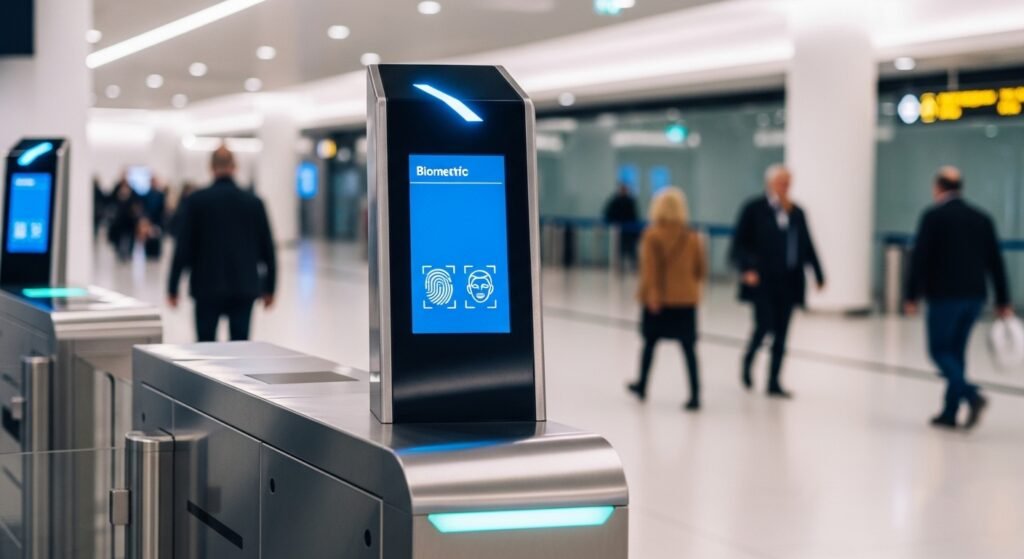
There’s a major change happening at Schengen borders this year that affects every traveler entering Europe, including Pakistanis with valid visas.
The Entry/Exit System (EES) becomes fully operational in April 2026. This replaces the old manual passport stamp with a digital system that collects your fingerprints and facial image at the border crossing. It tracks your entry and exit dates automatically.
What this means for you practically: expect slightly longer queues at your first point of entry into Schengen. The visa application process itself is unchanged. Your visa is still required. The EES just changes what happens at the border gate, not at the embassy.
What to Do If Your Schengen Visa Gets Rejected
Getting a rejection is not the end.
Your refusal letter will tell you the specific reason. Read it carefully — this is the most important document you have right now. Common reasons include insufficient financial proof, incomplete documentation, weak ties to Pakistan, or administrative issues like applying at the wrong embassy.
You have the right to appeal within 30 days of receiving the refusal. Most appeals are submitted through the same embassy that rejected you.
More practically: fix the root cause. If it was your bank statement, build a proper 6-month financial history before reapplying. If it was the cover letter, write a much stronger one. If it was a documentation issue, get every document on the checklist this time without exception.
Many Pakistanis who get rejected on their first Schengen application get approved on the second — because they understand what the embassy is actually looking for.

How much bank balance do I need for a Schengen visa from Pakistan?
The general rule is €50–€70 per day of travel, on top of your pre-paid accommodation and flights. For a 15-day trip, maintain at least €750–€1,050 in your account, consistently, over 6 months. Lump-sum deposits right before applying don’t count in your favor.
Which schengen visa is easy to get from pakistan?
Honestly, no Schengen visa is “easy” for Pakistani applicants — the overall rejection rate sits around 52%. Globally, Lithuania and Latvia have lower rejection rates, but those figures don’t reflect the Pakistan-specific picture. Your best bet is to pick the country that matches your itinerary and then build the strongest possible application. A perfect file at the German embassy beats a weak file anywhere else.
How long does it take to get a Schengen visa from Pakistan?
Processing takes 15–30 working days on average after your VFS submission. Apply at least 6–8 weeks before your intended travel date, and 10 weeks if you’re planning to travel in summer.
Can I visit multiple Schengen countries on one visa?
Yes. One approval gives you free movement across all 29 Schengen countries for the duration of your authorized stay
Is the Schengen visa fee refundable if rejected?
No. The €90 embassy fee is non-refundable regardless of the outcome.
Can I apply for a Schengen visa if I have a US, UK, or UAE visa?
Yes. And having those visas can actually work in your favor — it shows you have international travel history and have complied with other countries’ immigration rules.
How many blank pages does my passport need?
At least 2 blank pages are required for the visa sticker.
Can I work in Europe on a Schengen visa?
No. The short-stay Schengen visa (Type C) does not permit employment. Working without authorization is illegal and will affect future visa applications.
What travel insurance do I need for a Schengen visa?
Insurance must cover a minimum of €30,000 in medical expenses and emergency repatriation. It must be valid in all Schengen countries for the full duration of your trip. Purchase from a recognized insurance provider, not a random online generator.
How early can I apply?
You can apply up to 6 months before your travel date, and no earlier than that.



Pingback: Spain Visit Visa from Pakistan 2026: BLS Process, Bank Statements, Fees & Why Half of Us Get Rejected
Pingback: Germany Work Visa Pakistan 2026: Opportunity Card, Fees & Full Process
Pingback: How to Get a Spain Visa From Pakistan (2026): Fees, the BLS/Intiana Update & Real Wait Times
Pingback: Spain Study Visa Requirements 2026: A Complete Guide for Pakistani Students
Pingback: Schengen Visa From USA (2026): $180 Total, 15-Day Wait & the Bank Rule That Gets You Refused