

A guy in Sugar Land, Texas booked ten days in Munich last spring. Green card in his wallet, ten years of US tax returns behind him, a Pakistani passport in the drawer. He assumed the card was the ticket. Four days before departure someone told him a Schengen visa from USA soil takes a minimum of two weeks at the German consulate — and that his green card was never going to be enough on its own. He ate the flights.
That mix-up happens constantly, and it comes down to one rule almost nobody explains properly.
Quick Answer
A Schengen visa from the USA costs $104 in embassy fees plus a $45 service charge at most application centres in 2026. A US green card does not replace the visa — your passport nationality decides whether you need one. Almost any legal US resident can apply, except people visiting the US on B1/B2 visitor visas.
Last verified: August 2026. Fees converted at €1 = $1.168 and $1 = ₨277.3.
Your green card decides where you apply, not whether you need a visa
Two different questions get tangled together here, and separating them fixes most of the confusion.
Question one: do you need a visa at all? Your passport answers this. Pakistani, Indian, Nigerian, Chinese and Bangladeshi nationals all need a Schengen visa regardless of US immigration status. Germany’s official service partner states it plainly: US residents from countries outside the EU visa-waiver programme must apply for a visa whether they hold a green card or a temporary residence permit.
Question two: where do you apply? Your US residence answers this. A green card, an H-1B, an F-1 with an endorsed I-20 — these let you file at a consulate in Houston or Chicago instead of flying home to Karachi for the appointment. That is the actual benefit, and it is a big one.
One thing to be clear about: ETIAS is not your problem. The EU expects to launch it in the last quarter of 2026, and it is built for visa-exempt nationalities only. If your passport needs a visa today, ETIAS changes nothing for you.
Who can actually apply from inside the USA

Germany’s official checklist for US-based applicants asks for a US alien registration card or a valid US resident visa in categories A, E, F with an endorsed I-20, G, H, I, J with a J-1 document, L, O or R. Read that list twice. B1/B2 is missing, and that is deliberate.
If you are in the US on a visitor visa, the consulate will turn you away. Germany’s own FAQ says it can only accept applicants who are legal resident aliens in the US, and that visitors must apply at the German mission in their home country. If that is your situation, the Schengen route for applicants filing from Pakistan is what you actually need.
A few more status traps worth knowing before you book anything:
- Your US status must stay valid for at least three months after you return from Europe. An H-1B expiring six weeks after your trip is a refusal waiting to happen.
- Your passport must outlast the trip by three months, hold two blank pages, and have been issued — not extended — within the past ten years. Italy’s consulates in Los Angeles and San Francisco apply the identical rule, so this is not a German quirk.
- An expired green card or expired US visa stops the process cold. German missions can only accept applicants holding a valid card or visa.
- Holders of a US Permit to Re-Enter (Form I-327) can sometimes apply without a national passport, but Germany warns those files may take up to two extra weeks to process.
- Refugee Travel Document (Form I-571) holders get an unusual break from Germany, which waives the visa entirely for stays up to 90 days provided the document stays valid four months past entry. That waiver is Germany-only. France, for one, explicitly requires a visa from holders of a refugee travel document or a permit to re-enter. Never assume one country’s exception travels with you.
Which consulate gets your file

You apply to the country where you will spend the most nights. Not the cheapest one, not the one with the earliest appointment. If the nights are split exactly evenly, you apply to your first point of entry into the Schengen area. Germany, Italy and the rest all word this the same way.
Where they differ is jurisdiction, and this is worth real money if you are stuck in a queue.
Germany locks you to your address. BLS states outright that your application will not be accepted if the appointment was booked under the wrong jurisdiction. A Dallas address cannot book a New York slot.
France does the opposite. The French government’s own page for the United States says applicants living in the US and its listed territories can set up an appointment at any of the eleven centres regardless of their location. If New York is booked solid through October, Houston or Seattle is fair game. Ten TLScontact centres cover Atlanta, Boston, Chicago, Houston, Los Angeles, Miami, New York, San Francisco, Seattle and Washington DC, with an eleventh in Jamaica. All decisions are made by the French Consulate in Washington DC regardless of where you filed.
Who physically takes your paperwork also varies:
| Destination | Who accepts your file in the US |
|---|---|
| Germany | BLS International, except Atlanta’s jurisdiction, which applies direct to the consulate |
| France | TLScontact, at any of 11 centres |
| Most other Schengen states | Usually VFS Global — confirm on your destination’s own consulate site |
Do check that last row yourself before booking. France ran through VFS Global until April 2025 and then switched to TLScontact, so these contracts genuinely change.
Payment rules differ too, in a way that catches people out at the counter. BLS centres handling German applications take cash, debit card or digital pay only and refuse credit cards, with a warning to bring exact change. France is the mirror image: payment in US dollars only, and only by Mastercard or Visa credit or debit card. Turning up with the wrong payment method means rebooking.
What a Schengen visa from the USA costs in 2026
The €90 fee is fixed EU-wide by Delegated Regulation (EU) 2024/1415 and has not moved since June 2024. What varies is everything bolted onto it. Below is Germany’s published table, effective 29 June 2026.
| Item | EUR | USD | PKR (approx) |
|---|---|---|---|
| Visa fee — adult | €90 | $104 | ₨28,800 |
| Visa fee — child 6–11 | €45 | $52 | ₨14,400 |
| Visa fee — child 12 and over | €90 | $104 | ₨28,800 |
| Visa fee — child 0–5 | €0 | $0 | ₨0 |
| BLS service fee, charged for every applicant including infants | €39 | $45 | ₨12,500 |
| Travel insurance, two weeks | — | $20–$50 | ₨5,500–₨13,900 |
| Passport courier return (optional) | — | $24 | ₨6,700 |
| Photo taken at the centre (optional) | — | $12 | ₨3,300 |
| SMS tracking (optional) | — | $2 | ₨550 |
| Prime Time out-of-hours appointment (optional) | — | $90 | ₨25,000 |
| Realistic total, one adult, with insurance | — | about $180 | about ₨50,000 |
Two things buried in that table are worth pulling out. Children aged twelve and over pay the full adult fee — the discount only exists for ages six to eleven. And the service fee applies to babies who pay nothing in visa fees. Two parents travelling with an eight-year-old and a ten-year-old pay $208 in adult fees, $104 in child fees and $180 in service fees. That is $492, roughly ₨136,000, before a single insurance policy.
Here is the sentence nobody enjoys: that money is gone whether you are approved or not. BLS confirms its service and optional-service charges are non-refundable, and France states that the fee is kept by the administration even when a visa is refused.
Fees are charged in dollars only, converted at the rate on the day you apply. Germany’s checklist spells this out. Budget a 10% buffer.
On insurance specifically — Schengen-compliant policies sold in the US start around $8 to $15 per week for a traveller in their twenties with a zero deductible, so a two-week trip lands near $20 to $30. Premiums climb with age. Get a real quote before you fix your budget rather than assuming the low end applies to you.
The documents, and the three that actually get people refused
Every German short-stay application from the US needs this core set:
- Completed VIDEX online form, printed with all barcode pages, signed
- Signed Declaration of Accuracy
- One biometric photo, 35 x 45 mm
- Passport — three months’ validity beyond the trip, two blank pages, issued within ten years
- Green card or valid US resident visa, plus an endorsed I-20 for F-1 or a DS-2019 for J-1
- Proof of address inside that consulate’s jurisdiction: driver’s license, utility bill or lease
- Confirmed round-trip flight reservation in your name
- Travel health insurance, minimum €30,000, which is about $35,000 today, covering the whole Schengen area for the whole trip
- Confirmed hotel bookings with name, address, phone and booking reference
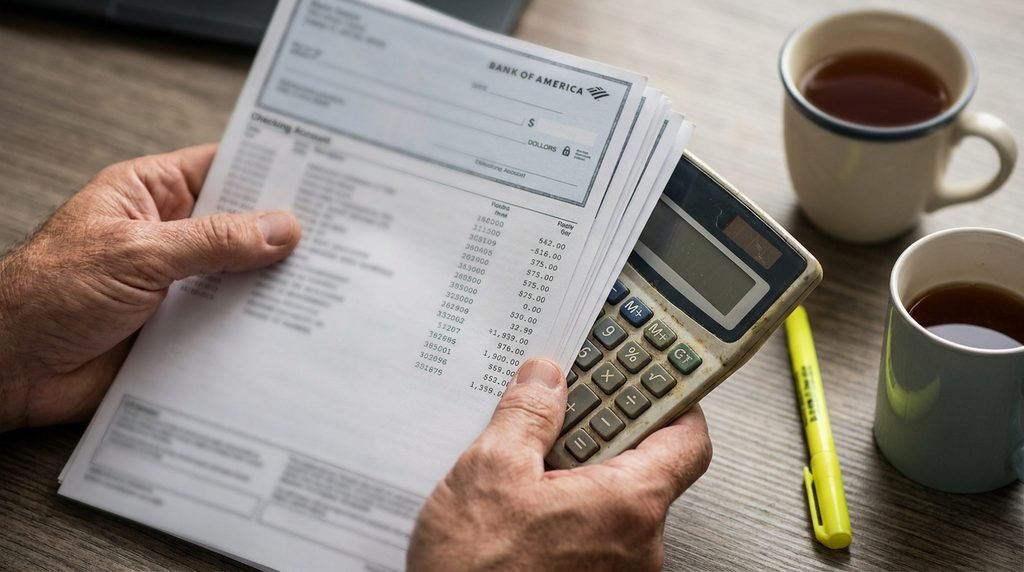
- Three months of US checking account statements
- Employer letter stating your salary, length of employment, approved leave dates and trip purpose
- Proof of family and social ties in the US, such as a marriage certificate or children’s birth certificates
Now the three that quietly sink applications.
Foreign bank statements are worthless here. This is the most expensive misunderstanding for Pakistani applicants in the US, and Germany’s checklist states it in black and white: foreign bank statements, fixed-term deposit accounts, statements for Travel Money Cards, credit card limits and cash cannot be accepted as proof of sufficient funds. Your father’s account in Lahore, your own HBL fixed deposit, the ₨40 lakh you were counting on — none of it counts. It must be your US personal checking account, three months, with your name and address printed on the statements. Business accounts are rejected too.
I helped a software engineer in Houston with exactly this last year. Strong H-1B, healthy salary, and he had thoughtfully attached a Meezan Bank statement showing serious savings back home, thinking more money meant a stronger file. The consulate did not care. His US checking balance was thin that month because he had just paid a tuition bill for his sister. He submitted anyway, and was refused for insufficient means of subsistence.
Insurance certificates have to be certificates. Not your employer’s benefits summary, not the card in your wallet. Germany’s checklist is blunt that employment letters and insurance cards are not accepted as proof of coverage. BLS adds two conditions most policies fail: the cover must be zero deductible, and the policy has to be issued in either the US or Germany. A cheap policy bought from a Pakistani insurer will be rejected at the counter.
Your host’s residence permit, not just their ID. If you are visiting friends or family in Germany and that person is not a German citizen, you need a copy of their foreign passport and their German residence permit, front and back. Both sides. Most people send a passport photo page and stop there.
If the trip is family-funded, your host will need to file a Verpflichtungserklärung, a formal obligation letter from their local Ausländerbehörde. I have sat through that appointment in Germany. The office wants payslips, the rental contract and proof the host can actually carry your costs. The fee is €29 for adults and €14.50 for minors, set federally under § 47 of the Aufenthaltsverordnung, payable in cash or by EC-Karte. Two details people learn the hard way: appointments in Berlin and Munich can be booked out for weeks, and the consulate will only accept the original stamped document by post. A scan emailed to you is useless.
For the cover letter that ties all this together — your itinerary, your reason for returning, your funding — the Schengen cover letter generator will get you a structured draft rather than the two vague paragraphs most people submit.
Realistic timeline, start to passport in hand
| Stage | Realistic time |
|---|---|
| Earliest you can lodge the application | 6 months before travel |
| Host obtains and posts a Verpflichtungserklärung from Germany | 2–4 weeks |
| Appointment wait | Longer in peak season; France advises booking to submit at least 15 days out |
| Standard consulate decision | Minimum 15 calendar days |
| Extended decision when extra checks are needed | Up to 45 days |
| Mail-in route decision | Up to 4 weeks, plus 2–3 business days shipping |
| Passport returned by courier or registered mail | 2–3 business days |
Germany’s guidance for US applicants sets a minimum of fifteen days, stretching to forty-five in some cases, plus mailing days on top.
Treat eight weeks before departure as your real deadline. Not because the visa takes eight weeks, but because the appointment queue plus a posted obligation letter from Germany plus a forty-five day worst case adds up faster than anyone expects. France returns passports by registered mail only, except in Washington DC, so build in postal time at the back end as well.
The mail-in route almost nobody uses
Here is the thing most guides on this keyword miss completely. If you already have a Schengen visa issued in the last 59 months, had your fingerprints taken for it, and actually used it to enter the Schengen area, you may be able to skip the appointment entirely and courier the whole file.
The conditions are specific. You confirm questions 26 and 27 on the VIDEX form, attach a copy of that previous visa, and — the part people trip on — your signature on the application form has to be notarized by a notary public. Processing then runs up to four weeks from the day they receive it, plus shipping.
So it is slower than an in-person appointment, not faster. What it saves you is a day off work and a flight to another state if you live four hours from the nearest centre. That 59-month biometric window is standard across the Schengen system, so it is worth asking about wherever you are applying.
Airport transit: the advance parole trap
This one is genuinely obscure and it strands people at the gate.
Pakistan is one of twenty nationalities that lose the airport transit privilege at German airports. The exemptions are generous — a valid US visa works, and so does a Form I-551 green card. But the Federal Foreign Office’s June 2026 list carves out a specific exception: advance parole, Form I-512, and the approval notice, Form I-797, are not valid documents for visa-free airport transit. An airport transit visa must be obtained.
If your green card application is pending and you are travelling on advance parole, you are not covered. You need a category A visa just to change planes in Frankfurt.
Three more ways the transit privilege disappears, from the same document: if you have to collect your baggage or check in again, if you transit through two or more airports inside the Schengen area, or if you hold an open ticket. Only five German airports even have an international transit area — Berlin Brandenburg, Düsseldorf, Frankfurt, Hamburg and Munich. Düsseldorf only works between 6:00 and 21:00, and only if your airline has arranged the transit with airport security in advance.
Indian nationals got a reprieve here. Germany lifted the airport transit visa requirement for Indian nationals on 3 June 2026, following Chancellor Merz’s January visit to India. No equivalent change has been announced for Pakistan.
What EES changed at the border in 2026
The Entry/Exit System went live progressively from 12 October 2025 and became fully operational on 10 April 2026, per the French foreign ministry.
At the border it means three things. Your face and fingerprints get captured and checked on entry and exit. Your passport is no longer stamped, because entries and exits are recorded digitally instead. And your first crossing takes longer while the system enrols you.
The stamp change matters more than it sounds. That inked stamp used to be how you proved you left on time when applying for your next visa. Now the record lives in a database you cannot see. Keep your boarding passes and hotel receipts for every trip. If a future consulate believes you overstayed and the digital record is wrong, paper is all you have.
Five mistakes that get people refused from the US
Applying to the wrong country to dodge a queue. Spending nine nights in Italy and two in Germany, then applying to Germany because a slot opened sooner, is grounds for refusal. Consulates check hotel bookings against the main-destination rule. If it is purely an appointment problem and France is genuinely your main destination, use France’s any-centre policy instead of switching countries.
Submitting a knowingly incomplete file. BLS will let you hand in an incomplete application if you sign a declaration accepting the risk. Germany’s own form carries the line acknowledging you were told the file was incomplete. People sign it hoping for the best. It is a refusal in slow motion.
Unverifiable flight and hotel bookings. Consulates check reference numbers now. A dummy PDF itinerary with no traceable booking reference reads as a forged document, and Germany warns that submitting forged documents or itineraries can lead to rejection.
Buying an appointment from an agent. BLS describes intermediaries selling appointments as a fraudulent practice it strongly condemns, and France’s government page carries its own scam warning about sites charging for French visa appointments. Appointments are free through the official portals.
A thin employer letter. “X works here” is not enough. It has to state your salary, how long you have been employed, and that your leave for those exact dates is approved. That letter is the clearest proof you are coming back.
If you get refused, Germany removed the appeal route in 2025
This is the change that should reset how you think about the whole application. The Federal Foreign Office abolished the remonstration procedure for visa rejections worldwide from 1 July 2025. Remonstration was the informal appeal — a letter to the consulate asking them to look again, free and reasonably effective.
It is gone. What remains, per their own announcement, is judicial review in a German administrative court, which is unaffected by the change, or submitting a fresh application at any time. In practice that means either a German lawyer and months of waiting, or paying the fee again and filing something stronger.
Reapplying is what nearly everyone does. Fix the actual refusal ground first. If they cited insufficient funds, do not reapply the following week with the same balance and a longer cover letter.
Globally, refusals are trending slightly down. The European Commission’s May 2026 release reported a global refusal rate of 14.6%, down from 14.8% in 2024, across more than 12 million short-stay applications in 2025. That figure blends every consulate in the world, so treat it as background rather than as your odds.
FAQs
Does a US green card let me enter Europe without a visa?
No. A green card determines where you may apply, not whether a visa is required. Visa requirements follow passport nationality. A Pakistani, Indian, or Nigerian passport holder needs a Schengen visa even after twenty years as a US permanent resident. The green card’s real value is letting you apply in the US rather than travelling home.
Can I apply for a Schengen visa in the USA on a B1/B2 visitor visa?
No. Germany’s consulates accept applications only from legal US residents and direct visitors to apply in their home country instead. The accepted status list covers A, E, F with endorsed I-20, G, H, I, J with a J-1 document, L, O and R visas, plus green card holders. B1/B2 is deliberately excluded.
How much is a Schengen visa from the USA in 2026?
The embassy fee is €90, charged as $104 for adults. Application centres add a service fee, which is $45 at BLS for Germany. With travel insurance, a realistic total for one adult is about $180, roughly ₨50,000. Children aged six to eleven pay a reduced $52, but children twelve and over pay the full adult rate.
Can I show my Pakistani bank statement as proof of funds?
No. Germany’s checklist excludes foreign bank statements, fixed-term deposits, Travel Money Card statements, credit card limits and cash. You need three months of statements from your own US personal checking account, printed with your name and address. Business accounts are also rejected. This is the most common avoidable refusal for South Asian applicants in the US.
How long does a Schengen visa take from the USA?
Minimum fifteen calendar days from lodging, extending to forty-five days when extra checks are needed, plus mailing time. Mail-in applications take up to four weeks from receipt plus two to three business days for courier. Apply eight weeks before travel to absorb appointment waits and a possible extension.
Can I book a visa appointment in a different US city?
It depends on the country. Germany refuses applications booked outside your address jurisdiction. France allows any US applicant to book at any of its eleven centres regardless of where they live, which is the single best workaround when your nearest city has no slots. Check your destination’s rule before assuming either way.
Do I need an ETIAS as a green card holder?
No. ETIAS is designed for visa-exempt nationalities and is expected to launch in the final quarter of 2026. If your passport requires a Schengen visa, ETIAS does not apply to you at all. Your visa remains the entry document, and the Entry/Exit System handles biometric registration at the border.
Can I appeal a German Schengen visa refusal?
Not through the old informal route. Germany abolished the remonstration procedure worldwide on 1 July 2025. Your remaining options are judicial review in a German administrative court, which requires a lawyer and considerable time, or submitting a fresh application. Most refused applicants reapply after correcting the specific ground cited on their refusal form.
Do I need an airport transit visa to change planes in Germany?
Pakistani nationals normally do, but a valid US visa or a Form I-551 green card exempts you. Advance parole (I-512) and approval notices (I-797) do not. You also lose the exemption if you must collect baggage, transit two Schengen airports, or hold an open ticket. Indian nationals were exempted from 3 June 2026.