
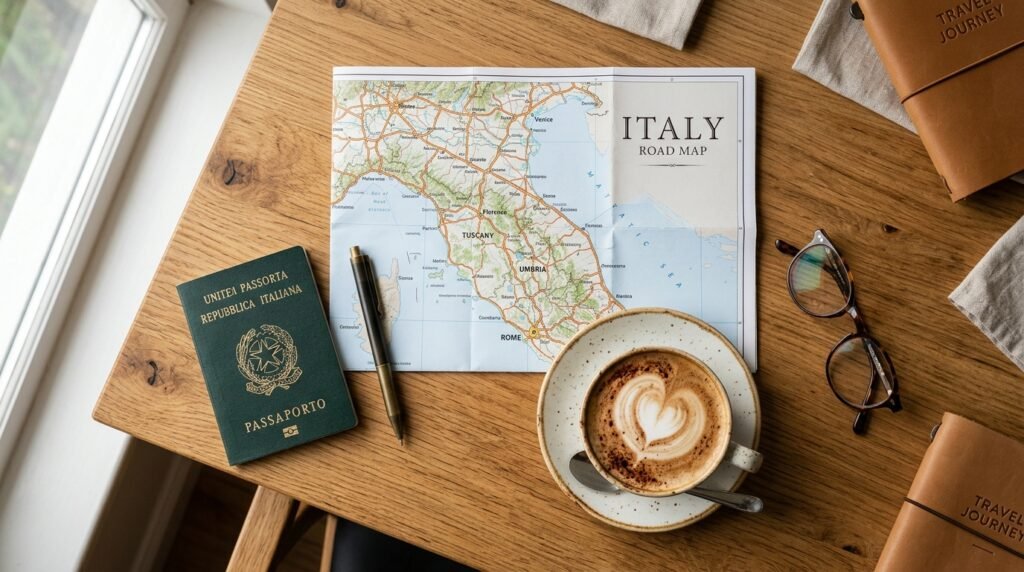
Quick Guide
To get an Italy study visa from Pakistan in 2026, apply for a Type D National Visa at the Italian Embassy (Islamabad) or consulate (Karachi). You need a university acceptance letter, minimum €6,079 in your bank account, DOV or CIMEA equivalency certificate, HEC-attested documents, and health insurance. Processing takes 45–90 days. Visa fee is approximately €50 (≈PKR 16,742).
Let me be honest with you. When I first started this whole Italy study visa journey, I thought it would be straightforward. Fill a form, get a stamp, fly out. Three months and two document rejections later, I knew better.
Italy is genuinely one of the most affordable, accessible, and student-friendly countries in Europe for Pakistanis. Public university tuition can go as low as €150 per year. You can work 20 hours a week. The visa success rate hovers around 90% for Pakistani applicants. And there are need-based DSU scholarships that can make it nearly free.
But the process has layers. DOV vs CIMEA. Universality pre-enrollment. The bank statement panic. The Questura visit after landing. If nobody walks you through it properly, you’ll waste months — or worse, get rejected on a technicality.
This is the guide I wish I had. Real info, updated for 2026, no fluff.
What Is the Italy Study Visa from Pakistan?
Pakistani students applying for any degree program longer than 90 days need the Type D National Visa — also called the “long-stay study visa.” It’s issued for the duration of your academic program (typically 1–2 years, renewable) and lets you:
- Study full-time at an Italian public or private university
- Work up to 20 hours per week legally
- Travel across the entire Schengen zone without needing separate visas
- Eventually apply for a residence permit (Permesso di Soggiorno) in Italy
The Type C visa is for short courses under 90 days — language schools, workshops, etc. — but if you’re going for a Bachelor’s or Master’s, you need Type D. Full stop.
Step-by-Step Process: Italy Study Visa from Pakistan 2026
Step 1: Get Admitted to an Italian University
Before any visa paperwork, you need a university acceptance. Italian public universities are surprisingly accessible — many don’t require IELTS if you can submit a Medium of Instruction (MOI) certificate from your previous institution.
Apply through your chosen university’s portal or the national Universitaly platform (universitaly.it). Once accepted, you’ll receive:
- A Letter of Acceptance (LoA)
- Or a conditional offer letter (enough to start your visa process)
Top universities Pakistani students apply to include the University of Bologna, Sapienza University of Rome, University of Padua, University of Milan, and Politecnico di Torino. Application fees are typically €30 — very manageable.
Pro tip: Some universities require CIMEA exclusively (like Sapienza). Check this before you apply, because DOV from the Italian Embassy won’t work for them. More on this below.
Step 2: Complete the Universality Pre-Enrollment (Form A)
For most Italian universities, international students must complete pre-enrollment through Universality — this is often called Form A. You:
- Fill it out online on the Universality platform
- Download and print it
- Attach your photo, sign it
- Submit it as part of your visa documents
This is a step many students miss entirely, or leave too late. Don’t.
Step 3: Get Your Equivalency Certificate — DOV or CIMEA
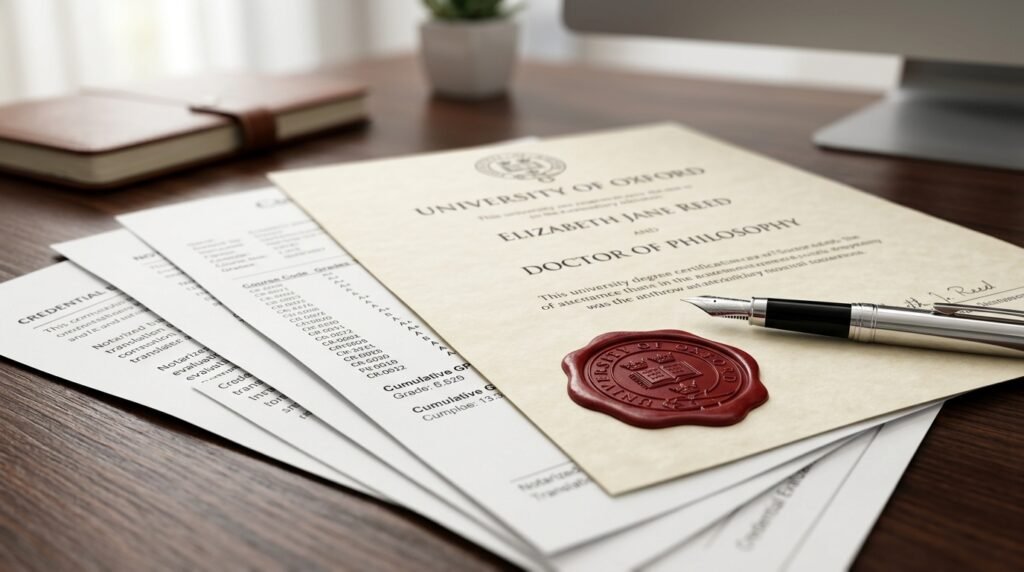
This is the one that confuses everybody.
Italy doesn’t automatically recognize Pakistani degrees. Your Bachelor’s or intermediate certificate needs to be “translated” into the Italian academic system. There are two ways to do this:
DOV (Declaration of Value)
- Full name: Dichiarazione di Valore
- Who issues it: The Italian Embassy in Islamabad
- When: At the time of your visa application
- Cost: Relatively low — it’s processed as part of your visa application via Form C (Documents Refinement Form)
- Drawback: You can’t get it before your visa appointment. Some universities won’t accept it.
CIMEA Certificate
- Who issues it: CIMEA (an independent Italian recognition body) — apply at cimea.it
- When: You can get it before your visa appointment — an advantage
- Types: Statement of Compatibility AND Statement of Verification (you may need one or both, depending on the university)
- Cost: More expensive than DOV, but worth it if your university requires it
- Processing time: Approximately 4–6 weeks
Bottom line: If your university specifically asks for CIMEA, get CIMEA. Don’t waste time on DOV in that case. If they accept either, DOV is cheaper and processed during your visa application — just make sure the embassy issues it before your interview date.
Step 4: Get HEC Attestation on Your Documents
This is Pakistan-specific. Your educational certificates (Matric, Intermediate, Bachelor’s, transcripts) must be:
- Attested by HEC (Higher Education Commission of Pakistan)
- Then verified by the Ministry of Foreign Affairs (MOFA)
- Then certified by the Italian Embassy
HEC offices are in Islamabad, Karachi, Lahore, Peshawar, and other major cities. Allow 2–4 weeks for this step. I cannot stress this enough — do it early. I once missed an embassy appointment because my HEC attestation came back late. Not fun.
Step 5: Prepare Your Bank Statement

This is the step that kills the most applications. Let me give you the actual numbers.
The Italian government’s official minimum is €467.65 per month for one academic year — which works out to €6,079.45 for a one-year program. For a two-year Master’s, that doubles to approximately €12,158.
However, the embassy regularly scrutinizes low-balance statements. The general community advice — and I agree with it — is to show €8,000–€10,000 to be safe.
What your bank statement needs to show:
- Account must be at least 6 months old
- Balance must be maintained consistently — sudden large deposits right before applying are a red flag
- The statement must be no more than 30 days old at the time of submission
- It must be on official bank letterhead with the authorized signatory, account opening date, and IBAN/account number
If parents are sponsoring you:
- Their bank statement (last 6 months)
- Affidavit of financial support (notarized)
- Tax returns for the last 2 years
- Property documents or other income proof
A rejection I personally saw: a student’s mother suddenly deposited a large lump sum two weeks before the appointment. Embassy flagged it as “funds not genuinely available.” The visa was refused. The money had been borrowed from relatives. This kind of thing happens more than you think.
Step 6: Assemble Your Full Document Checklist
Here’s the complete list for an Italy study visa from Pakistan in 2026:
| # | Document | Notes |
|---|---|---|
| 1 | Completed visa application form | Available at theitalyvisa.com |
| 2 | Recent passport-size photograph | White background, glasses OK if eyes visible |
| 3 | Valid passport | At least 3 months validity beyond intended stay |
| 4 | University acceptance/enrollment letter | Original |
| 5 | Universality Form A (pre-enrollment) | Printed and signed |
| 6 | DOV or CIMEA certificate | Depends on university requirement |
| 7 | HEC-attested + MOFA-certified educational documents | Matric, FSc/A-levels, Bachelor’s, transcripts |
| 8 | Bank statement (last 6 months) | Showing minimum €6,079 — aim for €8,000+ |
| 9 | Sponsorship affidavit (if applicable) | Notarized |
| 10 | Proof of accommodation in Italy | Dormitory booking or rental agreement |
| 11 | Health insurance | Minimum coverage of €30,000 |
| 12 | IELTS/TOEFL or MOI letter | Depending on program language |
| 13 | Visa application fee receipt | €50 ≈ PKR 16,742 (Type D) |
| 14 | CNIC, Domicile certificate, Birth certificate | Pakistani national ID docs |
All documents must be translated into Italian by a certified translator if they’re not originally in English or Italian.
Step 7: Book Your Appointment and Apply
Italy’s visa application centers in Pakistan are managed through theitalyvisa.com. There are centers in:
- Islamabad (for Punjab, KP, and Northern Areas)
- Lahore (for Punjab applicants)
- Faisalabad and Multan (also Punjab/KP)
- Karachi and Quetta (for Sindh and Baluchistan)
The visa application center charges a service fee of PKR 11,180 in addition to the actual visa fee of PKR 16,742 (for Type D). So your total upfront cost is roughly PKR 27,000–28,000.
Book your appointment at least 90 days before your intended travel date. Wait times at Pakistani centers can stretch 4–8 weeks just for an appointment slot — especially around peak intake seasons (August–September and January–February).
Step 8: Attend the Interview
Not all applicants are called for an interview, but be prepared. Common questions:
- Why Italy specifically?
- What will you study and why?
- How will you financially support yourself?
- Do you have family/contacts in Italy?
- What are your plans after graduation?
Answer confidently and consistently with your documents. Don’t volunteer information that’s not asked.
Step 9: After Landing — Permesso di Soggiorno
This one shocks a lot of students. You don’t just land in Italy and relax. Within 8 working days of arrival, you must visit the local Questura (police headquarters) and apply for your Permesso di Soggiorno (residence permit). Take:
- Passport
- Visa
- Accommodation proof
- University enrollment certificate
- Passport-size photos
- Completed kit postale (available at post offices)
If you miss this window, you’re technically in violation of immigration rules. The Questura will schedule an appointment and issue a receipt — keep that receipt safe, as it serves as your temporary permit while the actual card is processed.
Italy Study Visa Timeline (Realistic 2026 Breakdown)
| Stage | Time Required |
|---|---|
| University application + acceptance | 4–12 weeks |
| HEC/MOFA attestation | 2–4 weeks |
| CIMEA processing (if needed) | 4–6 weeks |
| Visa appointment booking | 4–8 weeks wait |
| Visa processing after submission | 45–90 days (Type D) |
| Total minimum planning timeline | 5–6 months before departure |
Start early. Ideally, if you’re targeting a September intake, begin everything in March at the latest.
Complete Cost Breakdown
| Expense | Approximate Cost (PKR) |
|---|---|
| Visa fee (Type D) | ~PKR 16,742 |
| VAC service fee | ~PKR 11,180 |
| HEC attestation | PKR 2,000–5,000 |
| MOFA verification | PKR 1,000–3,000 |
| Italian translation fees | PKR 5,000–15,000 |
| CIMEA certificate (if needed) | €100–€150 (≈PKR 30,000–45,000) |
| Health insurance | €80–€150/year |
| University application fee | €30 (≈PKR 9,000) |
| Total (rough estimate) | PKR 60,000–120,000 |
This is just pre-departure cost. Monthly living in Italy ranges €700–€900 depending on the city. Rome and Milan are more expensive; Pisa, Siena, Perugia, and Bologna are very manageable.
DSU Scholarships — The Game Changer for Pakistani Students
DSU stands for Diritto allo Studio Universitario — which translates to “Right to University Study.” Every Italian region has its own DSU agency that provides financial aid to students based on economic need, not purely academic merit.
This is huge for Pakistani students because:
- It’s primarily income-based — so your CGPA doesn’t have to be stellar
- It covers tuition waiver, subsidized accommodation, free meals, and a cash stipend
- It’s available to international students, including Pakistanis
What DSU Can Cover:
- Full or partial tuition waiver
- Free or subsidized university accommodation (dormitory)
- Free meals at the university mensa (canteen)
- Annual cash stipend (varies by region, but typically €1,500–€2,500/year)
How to Apply for DSU as a Pakistani Student:
- Get admitted to an Italian public university
- Calculate your ISEE Parificato — this is the Italian equivalent of your family income assessment, adapted for foreign students. You’ll need income and asset documents from Pakistan (tax returns, property documents, salary certificates), all translated into Italian and legalized by MOFA and the Italian Embassy.
- Submit income documents to the Pakistani Embassy in Milan for verification (yes, the embassy in Italy, not Pakistan — current students in Italy can help facilitate this)
- After verification, documents go to the relevant regional DSU office or CAF (tax assistance center)
- Wait for ranking — DSU is merit-within-need, so you’re ranked against other applicants
Regional DSU Bodies to Know:
- DSU Toscana — covers University of Florence, University of Pisa, University of Siena
- EDISU Piemonte — Politecnico di Torino, University of Turin
- ER.GO — University of Bologna
- DiSCo Lazio — Sapienza Rome, Tor Vergata
- Camplus, Laziodisu — various regions
Each region has slightly different rules and deadlines. Always check the specific DSU body for your university’s region.
Important: DSU application windows typically open after university enrollment, usually June–October. Don’t miss the deadline — scholarships are competitive, especially at top universities.
Italy Study Visa Success Rate in 2026 — What You Need to Know
The italy study visa success rate 2026 for Pakistani applicants is reported at approximately 90%. This is genuinely high compared to Schengen tourist visas or UK/Canada student visas. Italy wants international students — they fill classrooms in underpopulated cities, support regional economies, and contribute to the cultural fabric.
But that 10% rejection rate? Almost always preventable. The most common reasons for refusal:
- Bank statement issues — inconsistent balance, sudden deposits, missing documentation
- Incomplete documents — missing Form A, no CIMEA/DOV, expired insurance
- Purpose not convincingly established — weak cover letter, vague study motivation
- Accommodation not proven — many students forget this; book university housing or submit a rental contract
- IELTS too low — if your program requires it, meet the minimum; MOI letters don’t always substitute
Common Mistakes Pakistani Students Make (and How to Avoid Them)
Mistake 1: Getting DOV when the university requires CIMEA Always check the university website. Sapienza explicitly requires CIMEA. If you go through the DOV process at the embassy and then realize the university won’t accept it, you’ve lost months.
Mistake 2: Submitting a “fresh” bank account A bank account opened just 2–3 months before the visa application with a high balance raises flags. The embassy wants to see financial history — not a recently inflated account.
Mistake 3: Ignoring the 90-day rule You should apply for your visa at least 90 days before your program start date. Given embassy delays and processing times in Pakistan, 5–6 months before departure is realistic.
Mistake 4: Forgetting to apply for Permesso di Soggiorno You have 8 working days after landing. Not 8 calendar days. Don’t assume it can wait — it legally cannot.
Mistake 5: Not researching DSU deadlines early enough DSU applications open and close fast. Some students arrive in Italy already enrolled but miss the DSU window because they didn’t research it beforehand.
Pro Tips (Insider Knowledge)
- Join Pakistani student Facebook/WhatsApp groups in Italy — communities like “Pakistanis in Bologna” or “Pakistani Students Italy” have real-time updates on embassy delays, DSU deadlines, and Questura appointment tips.
- Use the MOI letter instead of IELTS where universities accept it — this saves you test fees and preparation time.
- Apply for university housing the moment you get admitted — Italian dorms fill fast, and having accommodation confirmation also strengthens your visa application.
- Don’t get your documents translated by just anyone — use certified translators recognized by the Italian Embassy. Incorrect translations are grounds for rejection.
- Keep extra photocopies of everything — some VAC centers return originals only if you submit copies. Don’t rely on their printing services.
- If using a sponsorship arrangement, make sure the affidavit is notarized and the sponsor’s income is documented across multiple years — a single year of tax returns often isn’t enough.
After the Degree — What’s Next?
Italy offers a 1-year post-study work visa (job seeker visa) after graduation. After 5 years of legal residence — including your study period — you can apply for permanent residency in Italy, and eventually EU citizenship through naturalization. Your Italian degree is recognized across all 27 EU member states, which is a massive long-term advantage.
How long does the Italy study visa take from Pakistan?
Processing for a Type D student visa typically takes 45–90 days after submission. Add 4–8 weeks just for getting an appointment at the VAC. Total planning timeline: 5–6 months minimum.
What is the bank statement requirement for Italy study visa from Pakistan?
The official minimum is €467.65/month, or €6,947.45 for one year. For a two-year program, approximately €12,158. It’s strongly advised to show €8,000–€10,000 to avoid scrutiny.
Which is better — DOV or CIMEA for Italy student visa?
DOV is cheaper and issued during your visa application. CIMEA costs more but can be obtained beforehand and is accepted by a wider range of universities. If your university requires CIMEA specifically (like Sapienza), always go with CIMEA.
Can Pakistani students get scholarships in Italy?
Yes — the DSU (Diritto allo Studio Universitario) regional scholarships are need-based and available to international students including Pakistanis. They can cover tuition, accommodation, meals, and a stipend. There are also MAECI government scholarships and university-specific merit awards.
What is the Italy study visa success rate for Pakistanis in 2026?
Approximately 90%, making Italy one of the most favorable European countries for Pakistani student visa approvals.
Do I need IELTS for Italy student visa?
Not always. Many Italian universities accept a Medium of Instruction (MOI) letter from your previous institution in lieu of IELTS. However, some universities — and the visa process itself — may require it depending on the program.
What happens if I don’t apply for Permesso di Soggiorno after landing?
You must apply within 8 working days of arriving in Italy at the local Questura. Missing this is a legal violation under Italian immigration rules and can complicate your stay and renewals significantly.
Can I work while studying in Italy?
Yes. Italian student visas (Type D) authorize you to work up to 20 hours per week during the academic year.
Official Links & Resources
- Italian Embassy Islamabad: ambislamabad.esteri.it
- Italy Visa Application Centre Pakistan: theitalyvisa.com
- Universality Pre-enrollment Portal: universitaly.it
- CIMEA Credential Recognition: cimea.it
- HEC Pakistan Attestation: hec.gov.pk
Need help writing your Italy visa cover letter or SOP? Check out PaceDraft’s Schengen Visa Cover Letter Generator and document tools — built specifically for students applying from Pakistan.


I have 3 year diploma of associate engineer and 4 year experience in saudi arabia now i want study in italy BS Mechanical i am confuse how to start my process
I dont know Pakistani DAE accept in Italy my study gap 5 year but i have experience latter of these years please guide me
Yes, a Pakistani 3-year DAE can be considered for Bachelor admission in Italy; CIMEA specifically lists Pakistan’s DAE among secondary-school qualifications, but the final decision is made by each Italian university and the qualification normally must meet Italy’s higher-education access requirements. Cimea Your 5-year study gap is not automatically a problem, especially because you can document it with your 4 years of Saudi work experience. Start by finding Italian universities offering a Bachelor in Mechanical Engineering (English or Italian), email their admissions office with your DAE certificate/transcript and ask whether your DAE is eligible, then prepare IBCC-attested documents, passport, English/Italian language proof, experience letters and CIMEA verification/comparability if the university requires it.